


The best footwear for a desert safari in Abu Dhabi is closed-toe sneakers or light hiking boots. They keep sand out, protect your feet from the sun and terrain, and offer solid traction on dunes—while staying breathable in the desert heat.
Ask ten past guests what shoes to wear on a desert safari and you’ll get two answers: closed sneakers, or flip-flops you can rinse off after. Both camps have a point. This guide settles which one actually works for which part of the day, based on what holds up on Al Khatim’s dunes.
Key Takeaways
- Closed-toe shoes like sneakers or trainers are your best bet for keeping sand out and protecting your feet.
- Light hiking boots work well for more adventurous desert activities, offering ankle support without being too heavy.
- Avoid sandals and flip-flops—they let sand in easily and can be uncomfortable or even painful.
- Consider the temperature. Days are hot, evenings get cooler, so choose shoes with some coverage but breathable materials.
- Breathable fabrics like mesh help keep your feet cool and dry under the desert sun.
Understanding the Desert Environment in Abu Dhabi
Sand Conditions: Soft Dunes and Uneven Terrain
When you picture a desert safari, think endless rolling sand dunes. Abu Dhabi’s desert is exactly that—but it’s not all smooth walking. You’ll encounter soft, powdery sand that can make movement tricky, much like walking on a beach with bigger hills.
The terrain can also be uneven, with dips and ridges you might not see coming. That’s why sturdy, supportive footwear matters—you don’t want a twisted ankle when exploring your favorite Abu Dhabi desert safari destination.
Temperature Fluctuations: Hot Days and Cooler Evenings
The desert’s temperature can swing dramatically. Daytime heat can be intense, but once the sun sets, the air cools quickly. By evening, you may even feel chilly. This is why your footwear should offer protection without overheating your feet during the day—especially when paired with smart outfit planning and an understanding of what to wear in desert conditions.
What Shoes Should You Wear for a Desert Safari?
Closed-toe sneakers or light trainers are the safest choice for dune bashing, quad biking, and camel riding. Sandals or slip-ons work fine once you’re settled at camp, where you’re not walking on hot, shifting sand.
The short version: match the shoe to the activity, not the whole day to one pair.
Key Features to Look for in Desert Safari Footwear
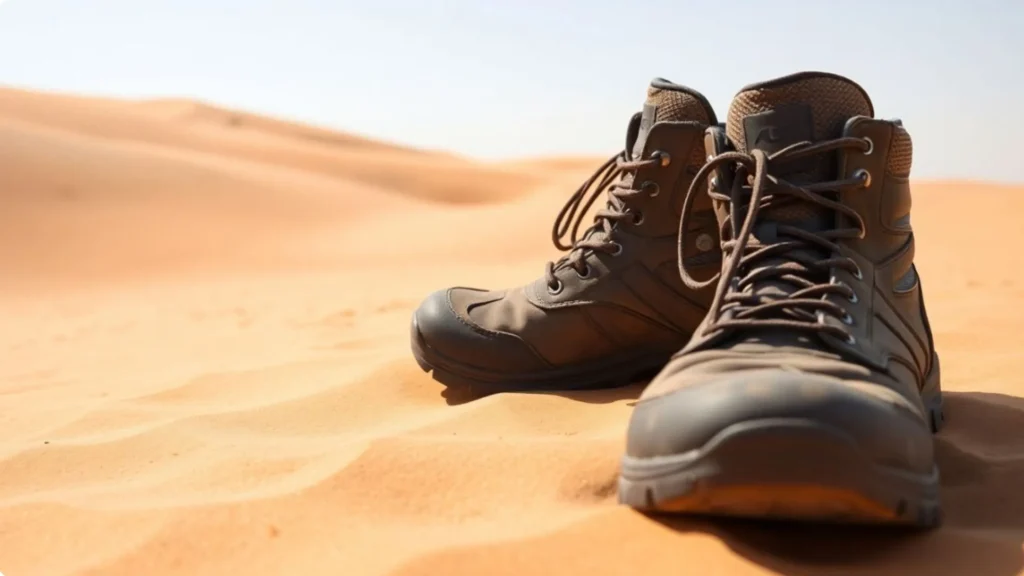
When preparing for a desert safari in Abu Dhabi, the right shoes are more than a style choice—they’re essential for comfort and protection. You’ll likely do some walking, dune climbing, and outdoor activities, so your footwear should handle both heat and terrain with ease.
Comfort and Support for Walking and Activities
From strolls around camp to more active moments like dune bashing or sandboarding, your feet need reliable support. Shoes with good cushioning and arch support make a huge difference. You’ll enjoy the scenery without being distracted by sore feet.
Protection from Sand and Heat
Desert sand is ultra-fine—it gets everywhere. Closed-toe footwear keeps sand out and shields your feet from direct sunlight. Open shoes might seem cooler, but they expose your skin and make walking uncomfortable. Choose shoes that offer coverage and are made of breathable materials for the best balance.
Traction for Slippery Surfaces
While dunes look smooth, they can be surprisingly slippery. Shoes with grippy soles prevent slipping when climbing or descending dunes, giving you stability and balance for photos or exploration.
Ease of Removal and Cleaning
This may seem minor, but it’s a real convenience. Shoes that are easy to take off are handy for relaxing at camp or cleaning out sand. Choose materials that can be wiped or brushed off easily—sand tends to stick!
Pro Tip: You’ll enjoy your safari much more if your footwear is comfortable and functional. The right choice keeps your feet safe from sand, sun, and uneven terrain—ensuring you get the most out of your desert experience.
Recommended Footwear Options for Your Desert Safari
Choosing footwear for an Abu Dhabi desert safari is all about balancing comfort, durability, and practicality. Here’s how to pick what works best.
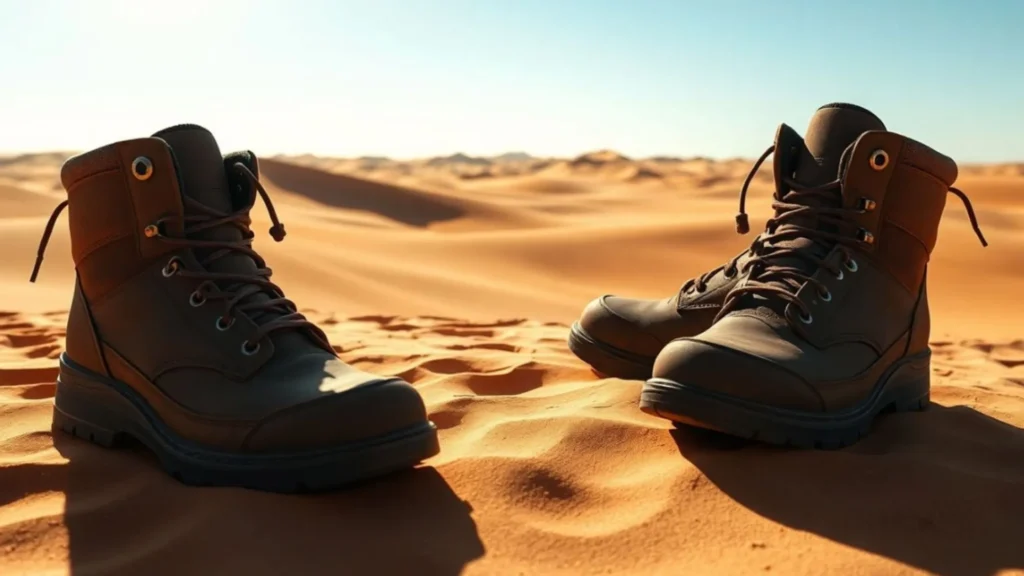
Closed-Toe Shoes: The Safest Bet
For most travelers, closed-toe shoes—like sneakers, trainers, or sturdy walking shoes—are ideal. They protect against sun exposure, small rocks, and sand. Opt for breathable mesh materials if visiting during warmer months.
Closed-toe shoes offer:
- Breathability: Mesh panels let air circulate.
- Cushioning: Comfortable for walking on uneven sand.
- Durability: Stands up to hot, dusty conditions.
They’re perfect for light walking, camp activities, or short dune climbs.
Hiking Boots: For the Adventurous
If your safari includes more rugged exploration or climbing steeper dunes, light hiking boots might be your best choice. They provide ankle support and stability for longer treks while resisting sand and dust. Just make sure they’re lightweight and breathable, not heavy-duty mountaineering boots. These are some of the best shoes for desert trekking, offering extra confidence and control on uneven terrain.
Sneakers vs Sandals: The Real Comparison
| Factor | Closed sneakers | Sandals / flip-flops |
|---|---|---|
| Hot midday sand | Full protection | Feet exposed to heat |
| Sand getting inside | Gets in, needs shaking out | None — rinses off instantly |
| Grip on dune slopes | Best traction for climbing/sliding | Loose, can slip off |
| Camel saddle & harness safety | Secure, won’t fall off mid-ride | Risk of slipping off |
| Comfort sitting at camp | Fine, but warmer | More breathable |
| Vehicle entry/exit | Stable footing | Can catch on the step |
Neither option is “wrong” — the mismatch happens when the wrong one is worn for the wrong part of the tour.
Why Sneakers Win for Dune Bashing, Quad Biking, and Camel Riding
Any activity involving movement — climbing a dune, gripping a quad bike’s footpegs, keeping your foot in a stirrup — needs a shoe that stays on. Closed sneakers with a grippy sole hold their place; open sandals can slip off mid-activity, which is both inconvenient and a genuine trip hazard on soft sand.
When Sandals Actually Make Sense
If your evening safari is mostly vehicle-based with limited walking, sandals or slip-ons are a reasonable, comfortable choice — and they solve the “sand in your shoes for a week” complaint that comes up often in traveler reviews. The trade-off: your feet are exposed to sun and hot sand during any time outside the vehicle.
Best Shoe Types to Pack
- Sneakers or trainers — the all-round safest option; breathable mesh keeps feet cool
- Light hiking boots — extra ankle support if your tour includes more rugged walking
- Closed sandals with a back strap — a middle ground for camp time, secure enough for camel riding
- Avoid: flip-flops for any dune bashing or quad biking, high heels, and stiff brand-new shoes not yet broken in
Footwear for Camel Riding
Closed shoes or a back-strap sandal work best — loose flip-flops can slip off mid-ride, and bare feet against the stirrup strap gets uncomfortable over a longer trek. For the rest of your camel-ride outfit, see our what to wear guide.
Footwear for Kids and Elders
Kids and older guests benefit most from closed, well-cushioned sneakers with a secure strap or laces — soft desert sand shifts underfoot more than it looks like it will, and stability matters more than breathability for anyone less steady on uneven ground.
What Not to Wear
- Flip-flops or loose slides for dune bashing or quad biking
- High heels or platform shoes — they sink straight into soft sand
- Brand-new, unbroken-in shoes — desert walking will find every pressure point
- Heavy leather boots in summer — they trap heat with little payoff in grip
Seasonal Footwear Notes
In summer (April–September), breathable mesh sneakers matter more since sand temperatures climb fast during the day. In winter (October–March), evenings cool quickly, so closed shoes and a pair of socks keep feet warmer once the sun drops — sandals alone won’t cut it after dark.
Practical Planning
What to bring: your chosen shoes plus a spare pair of socks, a small bag for sandy shoes on the drive back, and sunscreen for exposed feet if you go the sandal route.
How to book: confirm your safari type and timing via WhatsApp on +971 55 484 2001 or through the Xtreme Sightseeing booking page.
Every Xtreme Sightseeing vehicle is roll-cage protected with certified, first-aid trained marshals on board, so footwear advice here is built around what our guides actually see hold up on the dunes at Al Khatim, not generic packing-list guesswork.
Wrapping Up Your Footwear Choices
When packing for your desert adventure, prioritize comfort and protection. Closed-toe sneakers or breathable trainers are your safest and most versatile options. If your safari involves lots of walking, light hiking boots add ankle stability. Avoid sandals or flip-flops to keep your feet sand-free and happy.
Planning ahead is key—not just for footwear but also for what to carry and what not pack for your safari. Pairing the right shoes with practical clothing will make your entire experience more enjoyable. And remember, the best time to visit Abu Dhabi’s desert is during the cooler months (October to March) when the sand is warm, not scorching.
By choosing the right footwear, you’ll explore comfortably, take in the breathtaking dunes, and create memories without a single foot ache.
Final Tip
A great pair of shoes can make or break your desert adventure. Choose comfort, coverage, and breathability, and your Abu Dhabi desert safari will be an unforgettable journey across the dunes.
Frequently Asked Questions
What shoes should I wear for a desert safari?
Closed-toe sneakers or light trainers for dune bashing, quad biking, and camel riding. Sandals or slip-ons are fine once you’re at camp and not walking on hot or shifting sand.
Can I wear sandals or flip-flops on a desert safari?
Yes, but only if your tour is mostly vehicle-based with little walking. Avoid them for dune bashing or quad biking, since open footwear can slip off during movement.
Are sneakers necessary for dune bashing?
Not mandatory, but strongly recommended. Closed sneakers grip better on dune slopes and won’t come off if you’re climbing or sliding on soft sand.
Will sand ruin my sneakers?
No, but expect to shake sand out afterward. Mesh sneakers are easier to clean than leather or suede, which trap fine sand in the stitching.
Do I need special shoes for camel riding?
Closed shoes or a back-strap sandal work best. Loose flip-flops can slip off mid-ride, and bare feet against the stirrup strap gets uncomfortable on a longer trek.
What shoes should kids wear on a desert safari?
Closed, cushioned sneakers with a secure strap or laces. Soft sand shifts more than it looks, so stability matters more than breathability for younger guests.
Are hiking boots overkill for a desert safari?
Not necessarily, light hiking boots add ankle support for more active tours, but a standard sneaker is enough for most morning and evening safaris.
